Friday, March 2, 2018

How Does Your Garden Grow?


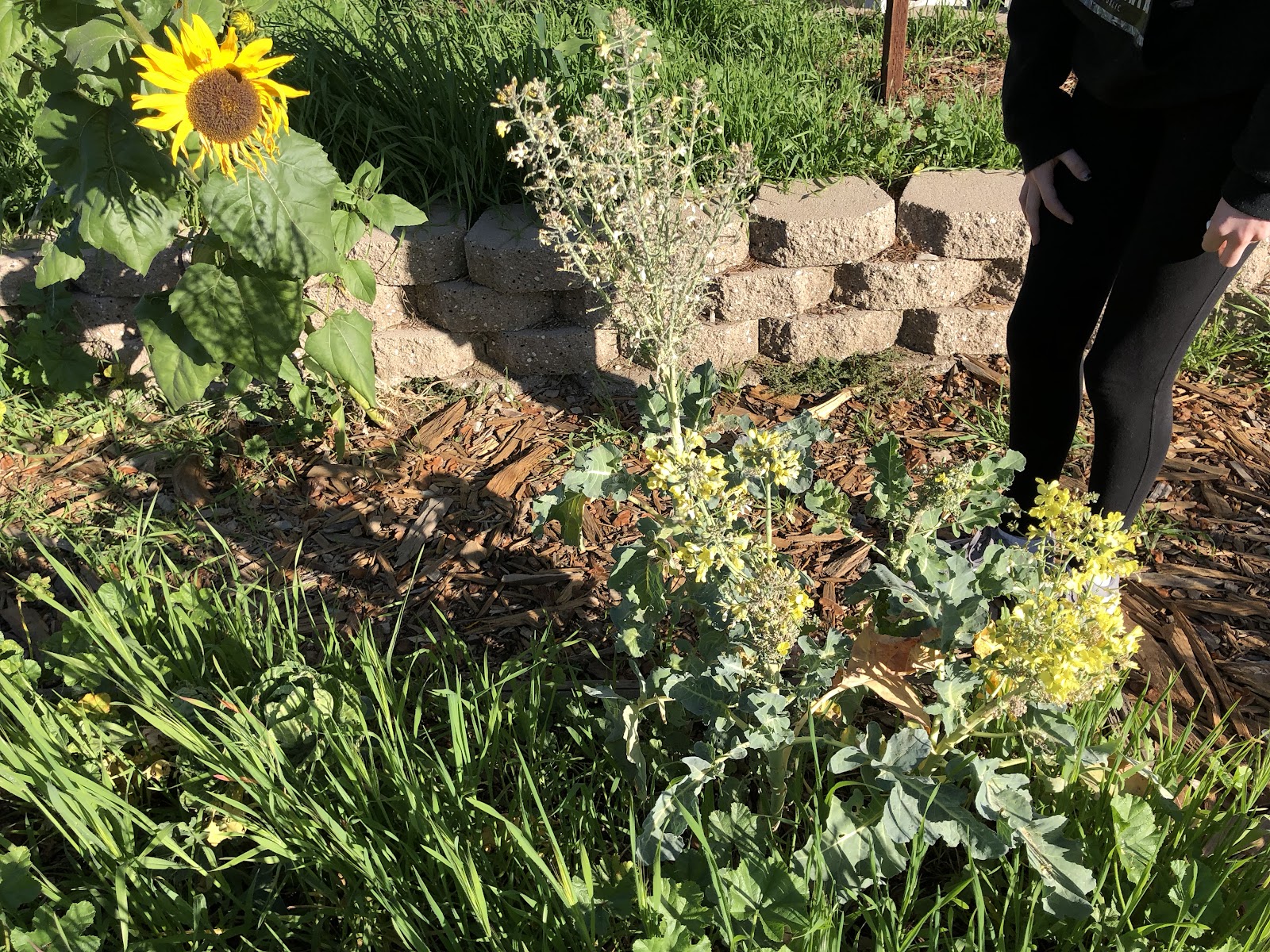
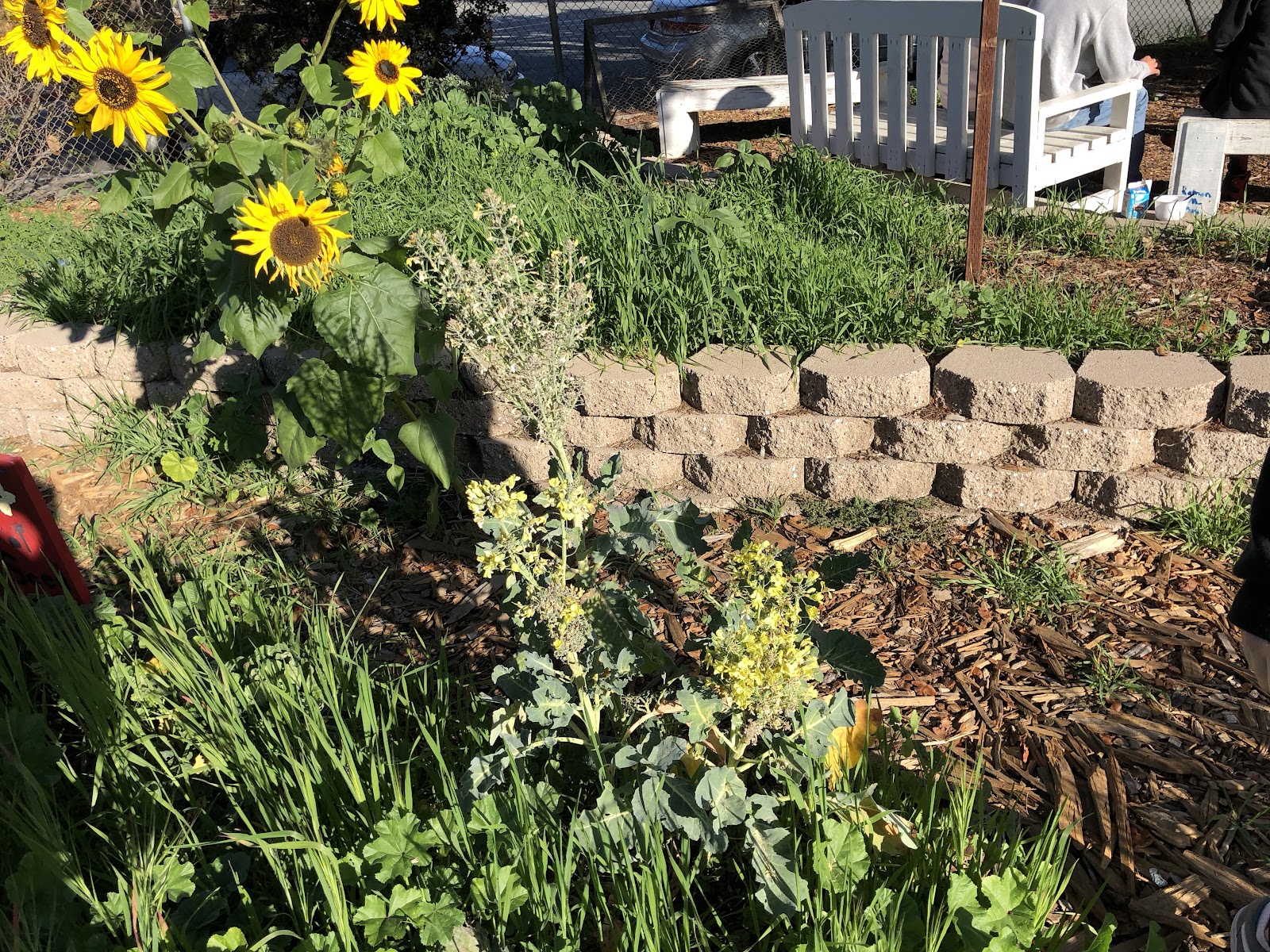
Our plant has grown a lot since we last saw it. Some of the plants even started flowering. There are many processes that go into our plants growing. The process by which biomass is added is called cell division. Cell division is how cells reproduce so that organisms can grow. Cell division starts off with interphase, which is when the cell performs its normal duties. Then, the cell starts to go into mitosis. The first step of mitosis, prophase, is when the chromosomes start to condense, spindle fibers emerge from the centrosomes, and the nuclear membrane breaks down. This step is the longest out of the process of mitosis. Next is metaphase. The chromosomes line up at the center of the cell and each sister chromatid is attached to a spindle fiber. In anaphase, sister chromatids are pulled apart and spindle fibers elongate the cell. Telophase is when the chromosomes reach opposite ends and the nuclear membrane starts to reform around them. Cytokinesis is when the two daughter cells split apart. Cell division happens the most on the tips of the roots of a plant because that’s where the plant is growing the most. Photosynthesis is how plants create their own food. Plants need sunlight, water, and carbon dioxide. There are two different cycles, one that requires light and one that doesn’t. Photosynthesis happens in the chloroplast of a plant. Photosynthesis produces oxygen and glucose, which can be used for cellular respiration. Cellular respiration uses oxygen to break down glucose into water and carbon dioxide. ATP captures the energy produced in this process. In eukaryotic cells like our plant’s cells, cellular respiration happens in the mitochondria of a cell. The mitochondria helps produce the power for a cell. All of these processes help the plant in different ways. Cell division helps the plant grow, photosynthesis allows the plant to have cellular respiration without consuming food, and cellular respiration creates energy for the cell.

If a cell needed to make more PKG or Rubisco, it sends a signal to the nucleus that it needs more. Both of theses are enzymes, which are a type of protein. Proteins are made of amino acid chains. In order to make these chains, DNA strands need to be transcripted into messenger RNA (mRNA) by RNA polymerase. Next, a ribosome reads the mRNA in sets of three, or codons, then translates it into amino acids. There are 64 possibilities for codons, including a start and stop codon. The amino acid chain then folds into an enzyme with a specific function.

Sunday, February 11, 2018

How does your garden grow! JT

Our Broccoli has gotten extremely larger from the last time we looked at it. It doesn't just put out more and more mass.  So what exactly does it do?  Well each of the cells go through mitosis.  Mitosis is where a cell divides and creates basically a replica of itself.  A cell first goes through interphase where the cell duplicates its organelles and copies its DNA.  DNA is a pretty important thing in cells because it is what makes the plant different than any other plant. The DNA is copied through a semi-conservative replication.  The process involves a couple enzymes and it occurs in the nucleus. The helicase unwinds the double helix and the DNA polymerase adds new nucleotides and copies the DNA.  It is semi-conservative because one strand is copied backwards and the other one is copied normal.  This is the longest phase by far.  After interphase prophase happens.  Prophase consists of the chromosomes condensing and the nucleus disappearing.  Microtubles are also formed.  Next, metaphase begins.  In metaphase the chromosomes line up and prepare to be split.  Then, anaphasae occurs and the chromosomes move to opposite sides of the cell.  Finally telophase takes place.  The chromosomes reach opposite walls and the cell begins to divide.  Cytokenisis finishes it off and there is 2 new cells.  Seems like a lot just for growth, but there are tons of cells constantly at work doing this and growing the plan or repairing it.  For example, our plant has lots of holes from bugs eating it away and the holes will slowly form again because mitosis is happening.  Also at the tips of the leaves the plant will be growing as well.

Enzymes are a crucial part of any living organism's life.  Plants use a vast amount of enzymes, but where do they get them?  If a cell is told a specific enzyme is needed, then it will begin protein synthesis, because enzymes are proteins.  Protein synthesis occurs in the nucleus and ribosomes.  Before anything happens the cell must create mRNA.  This is made during transcription when a copy of the DNA is created.  The mRNA has 3 letter sequences on it that are codons and they are codes for amino acids.  After the mRNA is made it is sent to the ribosomes to begin translation.  Translation is where the ribosome reads each codon using an anticodon and creates the correct amino acid.  Once it is complete you are left with a new protein which if was asked for would be an enzyme.

Friday, February 9, 2018

When I went out to the garden to check on my broccoli plant, the results were surprising. My team's broccoli plant had become the biggest plant in comparison to all the other team;s plants in the planter box. I looked even closer at the plant and took notice it was sprouting broccoli buds. They were pretty big, too when compared to the buds on everyone else's plant buds. I figure it will take some time for the broccoli buds to fully sprout, but if we keep an eye on them and make sure they are getting the resources they need, they will be fully grown soon enough.
I feel as though the broccoi plant may need to be moved to a arger planter box with more space in the near future however. It is starting to tower over the other plants. It may enagage in competition with the other plants for resources and make the other plants malnourished.
The rubisco enzyme catalyzes the carbon fixing step at the beginning of the Calvin cycle. This allows the plant to revive sunlight, water, and nutrients through photosynthesis. This also works with enzyme CEPC for the plant.
Overall, our plant has been thriving despite the competition and other limiting factors around it. I predict our plant will soon have full heads of broccoli ready to be harvested and tasted.


Monday, December 18, 2017

Leah's Seed Story

1)What have you learned?
Leah learned how to care for a plant, the different types of reactions a plant goes through, how they are a major part of the world, and their interactions to the environment.

2)What's surprised you?
Leah was surprised on how fast her plant grew, and how they had holes in them because bugs were always eating them. Also, she was surprised by all that different cycles the plant was a part of.

3)What made you laugh?
What made her laugh was working with her team mates,i creating all the labs with their plants, and planting them and tending to them. Also, documenting and checking on their cabbage. The whole experience was fun and memorable.

4)What caused you to think a little deeper?
What made her think more was all the labs they did with their pants because before that she had no idea what went on inside of plants. All of the labs and lessons helped open my eyes to see how much plants go through and how they contribute a lot to the environment we live in.

5)Questions you have?
How did the chickens escape their coop? How did our plants grow so quickly?

Grace Slone's interview

Grace Slone’s story of the seed interview: blog post #5
By Gabriella Lasserre, P-1

For this blog post, I interviewed Grace Slone from our first period class. Upon asking her what she learned so far in this class this semester, she said she learned that competition doesn’t necessarily mean the consumption of one organism by another. The thing that surprised Grace was that in our first experiment, when we added chlorophyll to the mix the plant did not grow. What made Grace think deeper was how all organisms and chemical cycles are related and have an affect on one another. Something that made Grace laugh in the class was how everyone was lighthearted and kind, and always cracking jokes to lighten the mood. Overall, Grace had a good experience in the first semester of honors biology and learned many new things she didn’t know before.     

\

Sam's Seed Story

What have you learned?

"I learned about the carbon cycle, water cycle, nitrogen cycle, competition between plants in the garden, and how seeds germinate."

What surprised or amazed you?

"I was surprised that plants can grow in a variety of different condition whether it's in competition, upside-down, or in limited space."


What made you laugh?

"I laughed when I found out how much grass we had to cut because I thought it was excessive."

What made you pause and think a little deeper?

"When my kohlrabi plant wasn't growing as fast or as much as the other plants I had to think what factors were affecting it."`

Thursday, December 14, 2017

Sydney's Seed Story

            Sydney has learned many thing while doing her seed project like how plants need light, carbon dioxide, and water to grow correctly and that if you add more chlorophyll to your plant it will not grow. What made her laugh was naming her plants and messing around with her friends in this group. Some things that surprised her is that her plants took 5 days to sprout and that breaking the ends of the roots on there plants they still grew. While she was doing her project a few things made think deep like how long does plants take to fully grow up and how making plants work you need a constant supply of water and carbon dioxide.