Wednesday, April 25, 2018

Blog Post #8

Blog Post #8

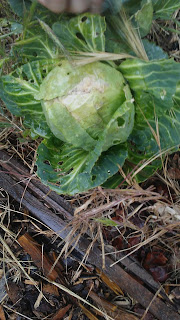
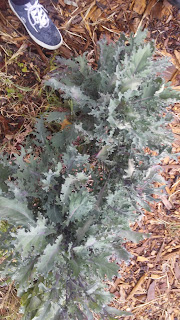
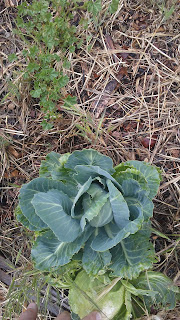
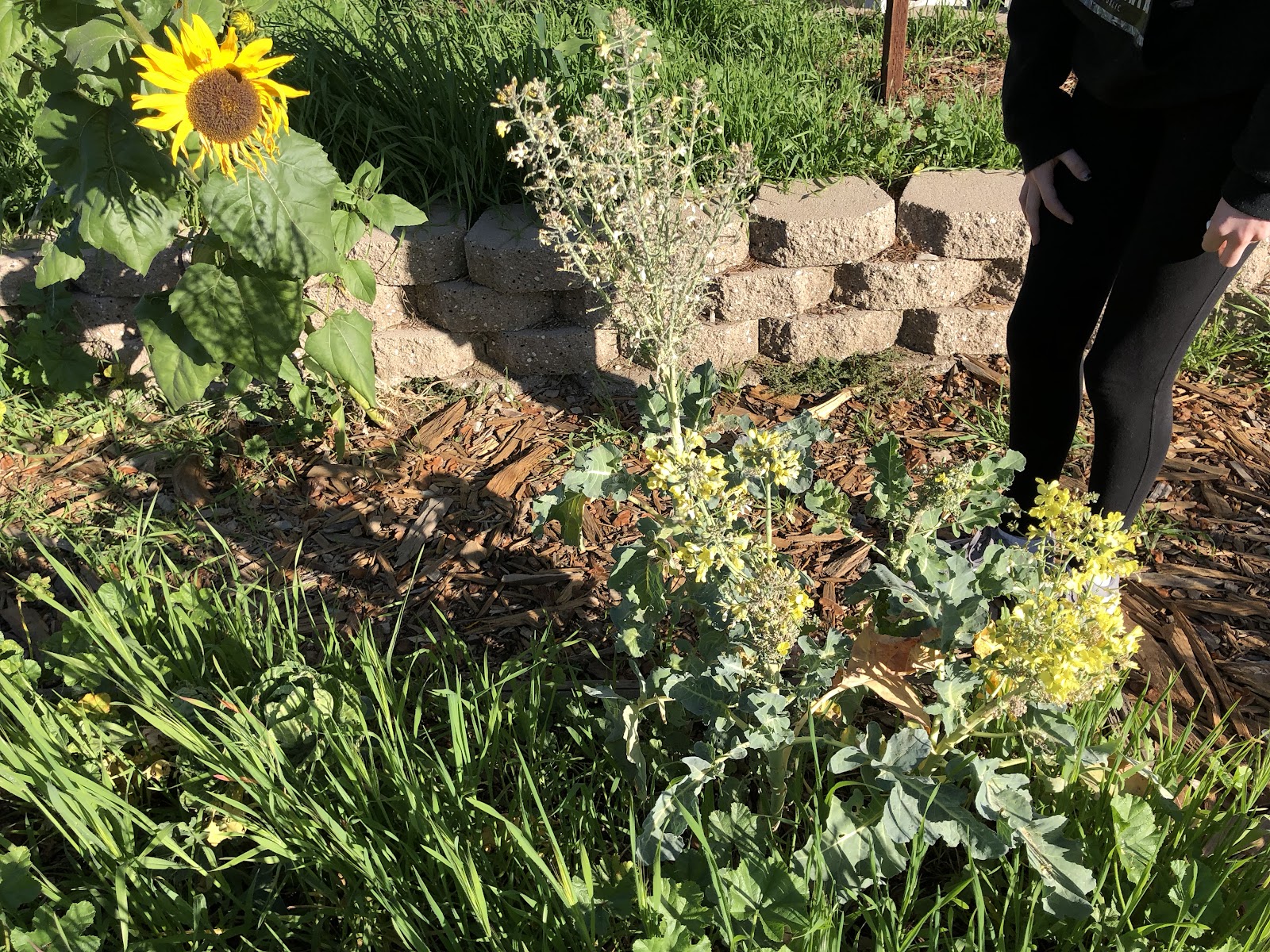
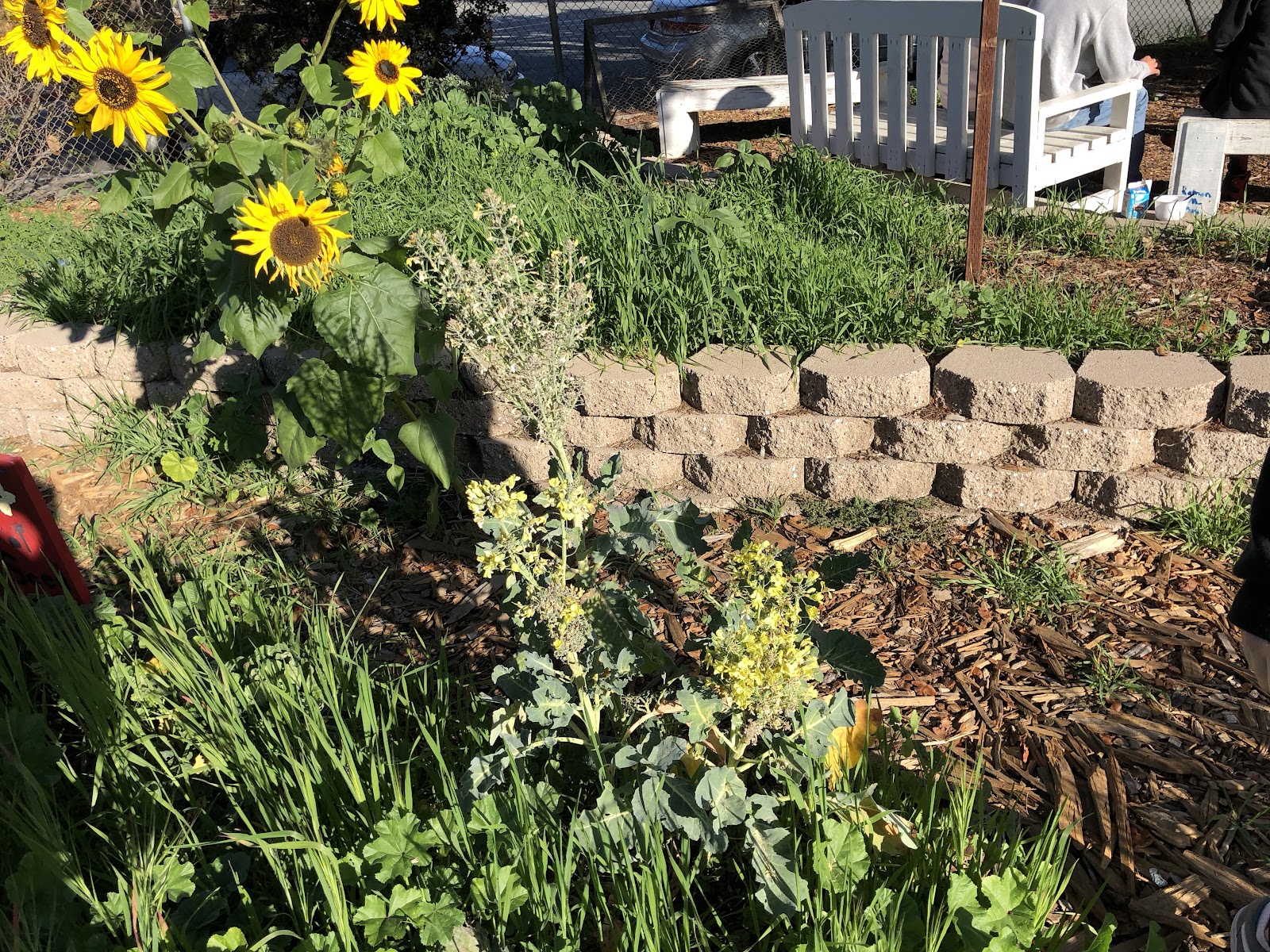
    We've noticed that the leaves' phenotype in the Brassica oleracea plants has a big variation. In color and shape. Some are round and others have a squiggly form. Some look fern green and others look like emerald green.  The round ones are shaped like an oval. Nice and smooth, and they consist of one color more or so. While the other leaves are pointy and squiggly with a purple outside.


During our further examination, we found that the Leaves have the same size despite all of the different features. This might of happened by the plants knowing what the perfect size to release CO2 and form into something else when ready. For instance, the average of all the leaves on the collards are 8 cm wide and 10 cm long, the Broccoli is 7.5 cm wide and 11 cm long, and on the cabbage are 9 cm wide and 9 cm long.

If a farmer wanted to change the size of the leaves you would have to plant it in a different way, like not in the same ecosystem or water it differently. This also can be genetically engineered to come out different but you may make a different plant when doing so. There is so much natural variations in these plants because we have domesticated them. By doing that, we changed the ecosystem that they grow in and changed how they got water and everything. That is called artificial selection. The mutations help the plants be more filling when we eat them. We use selective breeding to choose which traits we want to keep and which ones we don't. Meaning that we tend to pic the thicker ones than the dry scrawny ones. 
Friday, April 20, 2018

Blog Post 8


Blog Post 8: A Matter of Selection by Gabriella Lasserre 

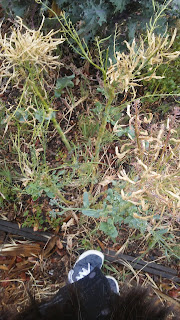
We analyzed many different brassica oleracea in the garden when we were doing the story of the seed projects. I noticed that the anatomy of the plants that had the most variation was probably the leaves. They diversitized in the shape of the leaves. Some were shorter and fatter, while others were long, slim, and lanky. Some of the leaves even measured a few inches longer than others. Most of the leaves didn't have a very smooth and clean-cut look to them. They seemed quite jagged and bumpy to the touch.

I think the cause of all the genetic variability in the plants happens for a few reasons. the gene pool is randomly sorted to give genes just out of chance to the plants. There is also the allele frequency. which is also by chance. You really don't know where or when a gene will show up in a certain plant, and whether or not it could possibly result as a genetic mutation.

After taking measurements of the plants in our garden, we discovered that the brussell sprouts were 3 feet tall, the kohlrabi was 1 ft. 2 in. tall, the cauliflower was 11 in. tall, the kale was 2 ft. 7 in. tall, the cabbage was 10 in. tall, and our brassica oleracea, the tallest in the planter box at 3 ft. 1 in. I think some of the reason why some plants grew taller and bigger than others was the fact that they were engaging in competition, competing for things like nutrients, food, water, sunlight, ect. Some of the plants just naturally had larger buds on them and were predicted to take up a larger space as the normally do.

I think the leaves were very consistent in staying the same for all of the plants in the garden. When we analyzed them, a lot of them stayed really healthy and hydrated throughout the year, and the plants that didn't survive just had their leaves all died out and brown in the end.

I think plant breeders would ave to mix very vast leaves of different plants together because they are all very similar in the sense of how they look and feel, and even taste. Breeders would definitely have to experiment with different types of plants and analyze the gene pools to see which plants had what alleles so they could randomize to result in a different looking plant, or possibly even a new species.

Being able to see our plants mature throughout the seasons and see their growth was a really cool experience. I think students will really like the idea of being able to care for and study these interesting plants in the years to come. We got to understand the environment they lived in more and factors that helped out the plants and ones that didn't so much.


Monday, March 5, 2018

Flower Dissections


Angiosperms have to go through the procedure of pollination before being able to do any type of reproducing. Pollination happens with the male sex organs of the flower, on the anther which is connected to the end of the stamen. The pollen is then moved to the female sex organs of the plant. Pollen is transported by birds and insects like bees when they get the get what they need out of the flower. Wind is also a factor in pollination. So, the pollen will get to the pistil in the female sex organs, and will end at the stigma at the end of the pistil. The stigma then moves the pollen down a tube which is called the style which no goes down to the ovary.  Angiosperms contain both female and male sex organs on the same plant, so the same flower does not need anything else to undergo the process of sexual reproduction.

These images are the sections of the broccoli plant taken apart and was examined under a microscope. You are able to see where the organs are of the flower.

Fertilization #7


In flowering plants like Brassica oleracea, plants can self-pollinate or cross-pollinate, although cross-pollinating often produces better results. Plants have both male and female reproductive parts. Fertilization starts when pollen grains are spread from the anthers either by wind, or a bee or pollinator picking it up. Then, the pollen grains land on the stigma of the same type of plant and each grain of pollen sends out a tiny tube. The tube grows through the style and into the ovary and attaches to one of the ovules. The ovules then become fertilized seeds.


This is a close up view of the petals of the flower. They are often brightly colored to attract pollinators to them so that the plant can reproduce.


This is a picture of the anthers of the flower. This is the top part of the male reproductive organ, called the stamen. The anthers are where pollen is stored.


This is a close up of the female reproductive organ of the plant, called the carpel. The tip of the carpel is sticky to catch pollen. It is called the stigma. The stigma is connected to the ovary with a tube called a style.


This is a picture of the ovary with ovules coming out of it. The ovules are what becomes a seed after fertilization takes place.

Flower #7

Angiosperms have to go through the procedure of pollination before being able to do any type of reproducing. Pollination happens with the male sex organs of the flower, on the anther which is connected to the end of the stamen. The pollen is then moved to the female sex organs of the plant. Pollen is transported by birds and insects like bees when they get the get what they need out of the flower. Wind is also a factor in pollination. So, the pollen will get to the pistil in the female sex organs, and will end at the stigma at the end of the pistil. The stigma then moves the pollen down a tube which is called the style which no goes down to the ovary.  Angiosperms contain both female and male sex organs on the same plant, so the same flower does not need anything else to undergo the process of sexual reproduction.

These images are the sections of the broccoli plant taken apart and was examined under a microscope. You are able to see where the organs are of the flower.

Friday, March 2, 2018

 Blog Post 7

          Angiosperms first have to go through the process of pollination before being able to reproduce. Pollination occurs on the male sex organs of the flower, on the anther which is on the end of the stamen. The pollen is then transferred to the female sex organs of the flower. Pollen is typically transported by birds and insects like bees when they get the nectar out of the flower. Wind is also a helping factor in pollination. So, the pollen will arrive at the pistil in the female sex organs, and will be left at the stigma at the end of the pistil. The stigma then takes the pollen down a tube called the style which goes down to the ovary.  Angiosperms contain both female and male sex organs on the same flower, so the same flower does not need anything else to undergo the process of sexual reproduction.

These images are the parts of the broccoli flower taken apart and examined closely under a microscope. You are able to tell where the sex organs are of the flower when viewed in the microscopic lens.
This is the carpel of the flower. The carpel is where everything going on in the female reproductive system of a flower occurs. The carpel contains the stigma, style, ovary, and ovule, which basically means the carpel is the female reproductive system of the flower.
This is the anther of the brassica oleracea. This is very important on the flower because it is what produces pollen in order to get pollinators to come to it. The pollen comes from the male reproductive system of the flower. 


This is a view of a petal of the flower examined under the microscope. The petals typically have peculiar shapes and are very colorful in hue in order to enthral pollinators. 


This is the ovary in the female reproductive system of the flower. If you look closely at the small bead-like little balls coming out of it, you will notice that these are the ovules. These develop into seeds upon fertilization.

How Does Your Garden Grow?


Our plant has grown a lot since we last saw it. Some of the plants even started flowering. There are many processes that go into our plants growing. The process by which biomass is added is called cell division. Cell division is how cells reproduce so that organisms can grow. Cell division starts off with interphase, which is when the cell performs its normal duties. Then, the cell starts to go into mitosis. The first step of mitosis, prophase, is when the chromosomes start to condense, spindle fibers emerge from the centrosomes, and the nuclear membrane breaks down. This step is the longest out of the process of mitosis. Next is metaphase. The chromosomes line up at the center of the cell and each sister chromatid is attached to a spindle fiber. In anaphase, sister chromatids are pulled apart and spindle fibers elongate the cell. Telophase is when the chromosomes reach opposite ends and the nuclear membrane starts to reform around them. Cytokinesis is when the two daughter cells split apart. Cell division happens the most on the tips of the roots of a plant because that’s where the plant is growing the most. Photosynthesis is how plants create their own food. Plants need sunlight, water, and carbon dioxide. There are two different cycles, one that requires light and one that doesn’t. Photosynthesis happens in the chloroplast of a plant. Photosynthesis produces oxygen and glucose, which can be used for cellular respiration. Cellular respiration uses oxygen to break down glucose into water and carbon dioxide. ATP captures the energy produced in this process. In eukaryotic cells like our plant’s cells, cellular respiration happens in the mitochondria of a cell. The mitochondria helps produce the power for a cell. All of these processes help the plant in different ways. Cell division helps the plant grow, photosynthesis allows the plant to have cellular respiration without consuming food, and cellular respiration creates energy for the cell.

If a cell needed to make more PKG or Rubisco, it sends a signal to the nucleus that it needs more. Both of theses are enzymes, which are a type of protein. Proteins are made of amino acid chains. In order to make these chains, DNA strands need to be transcripted into messenger RNA (mRNA) by RNA polymerase. Next, a ribosome reads the mRNA in sets of three, or codons, then translates it into amino acids. There are 64 possibilities for codons, including a start and stop codon. The amino acid chain then folds into an enzyme with a specific function.